Meningitis- outbreak of meningococcal disease in Kent.
We are aware of reports of a meningitis outbreak in the Kent community. The UK Health Security Agency (UKHSA) is continuing to investigate and at present only a small, targeted vaccination programme will take place at The University of Kent.
Investigations have confirmed that some of the meningitis cases identified are group B meningococcal disease. From 2015, the MenB vaccine has been available on the NHS as part of routine childhood immunisations. There is currently no catch-up programme for children born before 2015 so we cannot offer a MenB vaccine to this age-group, but the UKHSA guidance on this may change in the future.
Please seek urgent medical attention if you develop any of the following symptoms.
Symptoms of meningitis
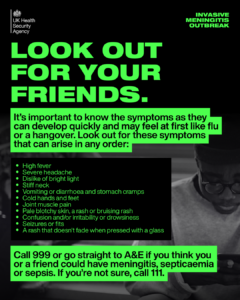
Symptoms of meningitis develop suddenly and can include:
- a high temperature (fever)
- being sick
- a headache
- a rash that does not fade when a glass is rolled over it (but a rash will not always develop)
- a stiff neck
- a dislike of bright lights
- drowsiness or unresponsiveness
- seizures (fits)
These symptoms can appear in any order. You do not always get all the symptoms.
When to get medical help
Call 999 for an ambulance or go to your nearest A&E immediately if you think you or someone you look after could have meningitis or sepsis.
Trust your instincts and do not wait for all the symptoms to appear or until a rash develops. Someone with meningitis or sepsis can get a lot worse very quickly.
Call NHS 111 for advice if you’re not sure if it’s anything serious or you think you may have been exposed to someone with meningitis.
If you’ve had medical advice and are still worried or any symptoms get worse, get medical help again.
How meningitis is spread
Meningitis is usually caused by a bacterial or viral infection.
Bacterial meningitis is rarer but more serious than viral meningitis.
Infections that cause meningitis can be spread through:
- sneezing
- coughing
- kissing
Meningitis is usually caught from people who carry these viruses or bacteria in their nose or throat but are not ill themselves.
It can also be caught from someone with meningitis, but this is less common.
